
Prana Air
Get in touch
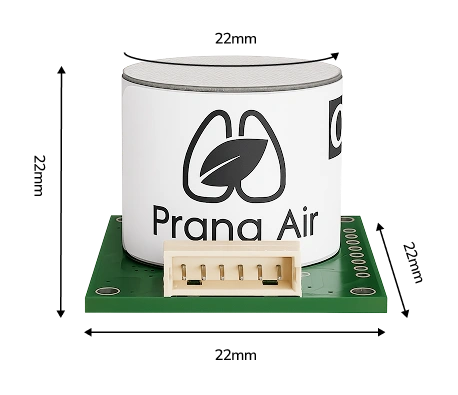
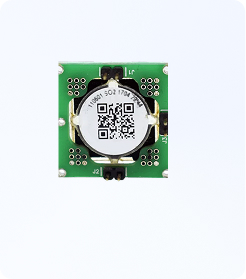
Ozone Sensor Image 1
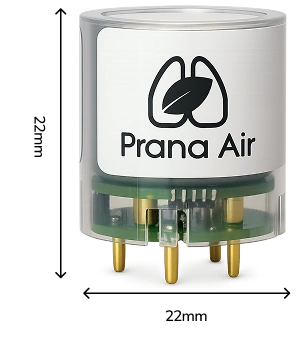
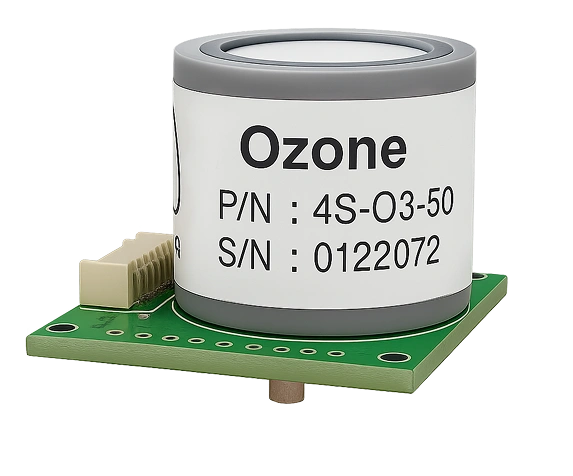
Ozone Sensor Image 2
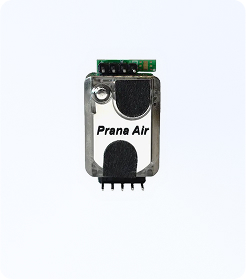
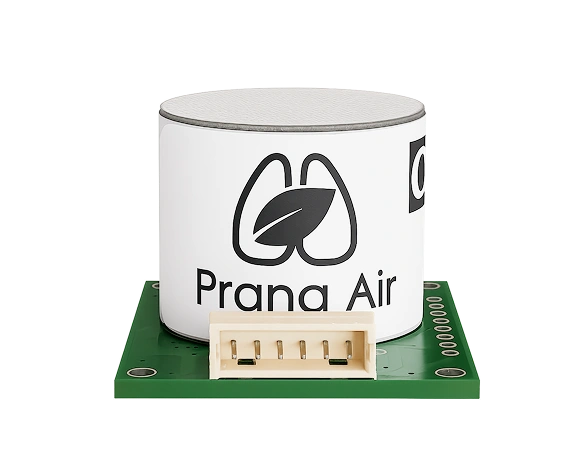
Ozone Sensor Image 3

Ozone Sensor

Highly Precise

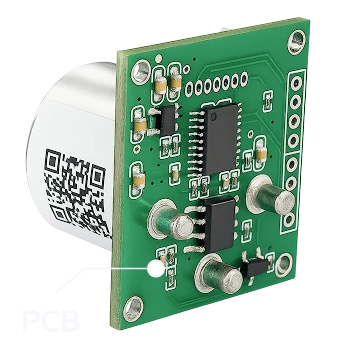
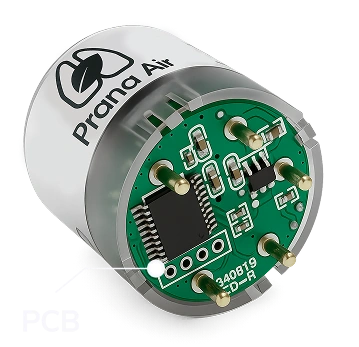
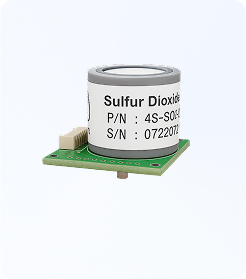
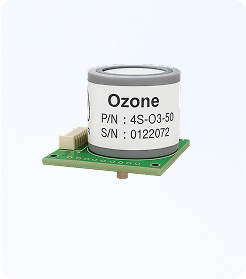
Prana Air’s Ozone (O₃) Sensor with PCB delivers precise monitoring at 1 ppb resolution. The built-in PCB design ensures stable performance, easy connections, and quick installation.

Ozone Sensor Introduction

The Ozone (O₃) Sensor with PCB delivers precise detection at 1 ppb resolution, providing reliable monitoring for environmental, industrial, or research applications. Its in-house PCB ensures steady performance and eliminates common issues with connectivity or inconsistent readings. The compact design makes it easy to integrate into custom monitoring devices or smart systems. With simple installation and ready-to-use operation, the sensor allows developers and researchers to quickly implement accurate ozone measurement solutions. It is built for long-term reliability and consistent performance, making it an excellent choice for projects requiring continuous ozone monitoring in air quality studies, safety systems, or laboratory setups.

  • 0.1 ppm Resolution
  • 0–500 ppm Range

Sensor

Ozone Sensor Variant A

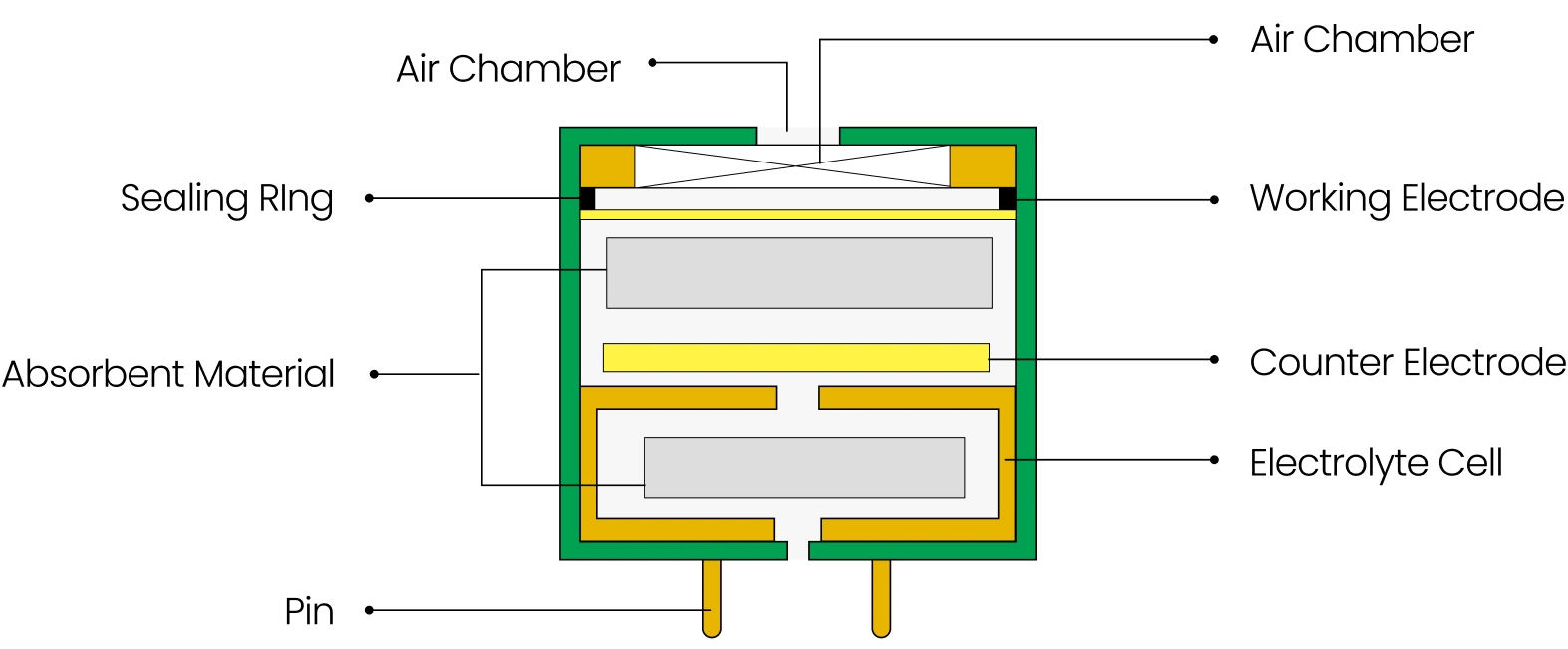
Prana Air offers high-quality ozone (O₃) sensors and monitoring systems that accurately measure ozone levels in the air. Keeping track of ozone levels is important because too much ozone can harm our health. Our sensors use electrochemical technology, which is the standard method for detecting ozone. These sensors work by measuring the electric current created when ozone reacts with a special liquid inside the sensor. The strength of this current tells us how much ozone is in the air — the more ozone, the stronger the current.

  • 0.1 ppm Resolution
  • 0–500 ppm Range

Sensor Module

Ozone Sensor Variant B

Why To Choose Prana Air Ozone Sensor?

  • Compact icon

    Compact Design

    The small and lightweight build makes it suitable for both fixed installations and portable handheld devices.

  • Durable icon

    Durable

    Designed for longevity, the sensor offers up to 10 years of reliable operation.

  • Responsive icon

    Highly Responsive

    Delivers accurate readings in less than 15 seconds, enabling real-time ozone monitoring.

  • Energy efficient icon

    Energy Efficient

    Consumes very low power (0 mW at 0 mV bias), helping reduce overall energy usage.

  • Calibration icon

    Individually Calibrated

    Each sensor is individually calibrated to ensure maximum accuracy and consistent results.

  • RoHS icon

    RoHS Compliant

    Manufactured without hazardous materials and fully compliant with RoHS (Restriction of Hazardous Substances) standards.

Sensor Calibration

Sensor calibration is done to make sure the sensor gives correct and reliable results. It works by checking the sensor's reading against a trusted standard. To do this, the sensor is tested with known amounts of ozone (O₃), and the results are compared to official values set by NIST (National Institute of Standards and Technology). This testing is done in stable conditions, such as a temperature around 23°C, humidity around 50%, normal air pressure, and gentle airflow. These conditions help make the calibration accurate.

Don't Just Detect ozone (O₃): Explore All Our Sensors.

technology.text

Your Air Quality Monitor: Track ozone (O₃) and Other Pollutants.

technology.text

What is ozone (O₃)?

Ammonia source image

Ozone is a gas made up of three oxygen atoms. It has a strong smell and is colourless to pale blue. There are two types of ozone: the good ozone high up in the sky (in the stratosphere) and the bad ozone near the ground. The ozone layer in the sky protects us from the sun's harmful ultraviolet (UV) rays. But the ozone we breathe at ground level can be harmful to our health. Ground-level ozone can come from several sources like car emissions, power plants, construction, chemical factories, and burning fuels like coal and gasoline. It can also increase when the protective ozone layer is damaged. That's why it's important to monitor ozone levels — to check air quality and to get alerts when ozone is present in places or amounts it shouldn't be.

What technology is being used in Ozone Sensors?

Technology working image

Prana Air's ozone sensor uses electrochemical technology to measure the amount of ozone in the air. This method works with three main parts: a working electrode, a counter electrode, and an ion conductor that connects the two. When ozone gas enters the sensor, it reacts with the working electrode. This reaction causes electrons to move, creating a small electric current between the electrodes. The strength of this current depends on how much ozone is present. By measuring the current, the sensor can accurately tell how much ozone is in the environment.

Sensor chip image
  • Buy ozone (O₃) Sensor PCB Now

  • Prana Air offers advanced, high-quality PCBs designed specifically for your ozone (O₃) sensor. These PCBs ensure stable performance, easy connectivity, and reliable readings every time. Upgrade your sensor now!

Applications of ozone (O₃) Sensor

Technical Specifications

  • Measurement Range

  • 0~50 PPM
  • Resolution

  • 0.01 PPM
  • Output Data UART

  • output (3.3V level)
  • Response Time

  • < 30 seconds
  • Recovery Time

  • ≤60 seconds
  • Sensitivity

  • @ 200m Vbias,25 +/- 10 nA/ppm
  • Service Life

  • 2 years (-20℃~50℃ in air)
  • Operating Temperature Range

  • -20℃~50℃
  • Operating Humidity Range

  • non-condensing 15%RH – 90%RH (no condensation)
  • Operating Voltage

  • 3.7V~5.5V
  • Measurement Range

  • 0~50 PPM
  • Resolution

  • 0.01 PPM
  • Output Data UART

  • output (3.3V level)
  • Response Time

  • < 30 seconds
  • Recovery Time

  • ≤60 seconds
  • Sensitivity

  • @ 200m Vbias,25 +/- 10 nA/ppm
  • Service Life

  • 2 years (-20℃~50℃ in air)
  • Operating Temperature Range

  • -20℃~50℃
  • Operating Humidity Range

  • non-condensing 15%RH – 90%RH (no condensation)
  • Operating Voltage

  • 3.7V~5.5V

Get in Touch

Please help us know what requirements you have. Our team will contact you very soon.

Contact Info

Looking for Any Indoor Air Quality Monitor?

  • Phone:
    (+91) 73918-73918

  • Office:
    706, 7th Floor, Sec 10, Rohini, Delhi 85, India

💬 Let’s Talk
We’d love to hear from you. Fill in the details below and our team will reach out shortly 🚀

Contact Info

Looking for Any Indoor Air Quality Monitor?

  • Phone:
    (+91) 73918-73918

  • Office:
    706, 7th Floor, Sec 10, Rohini, Delhi 85, India