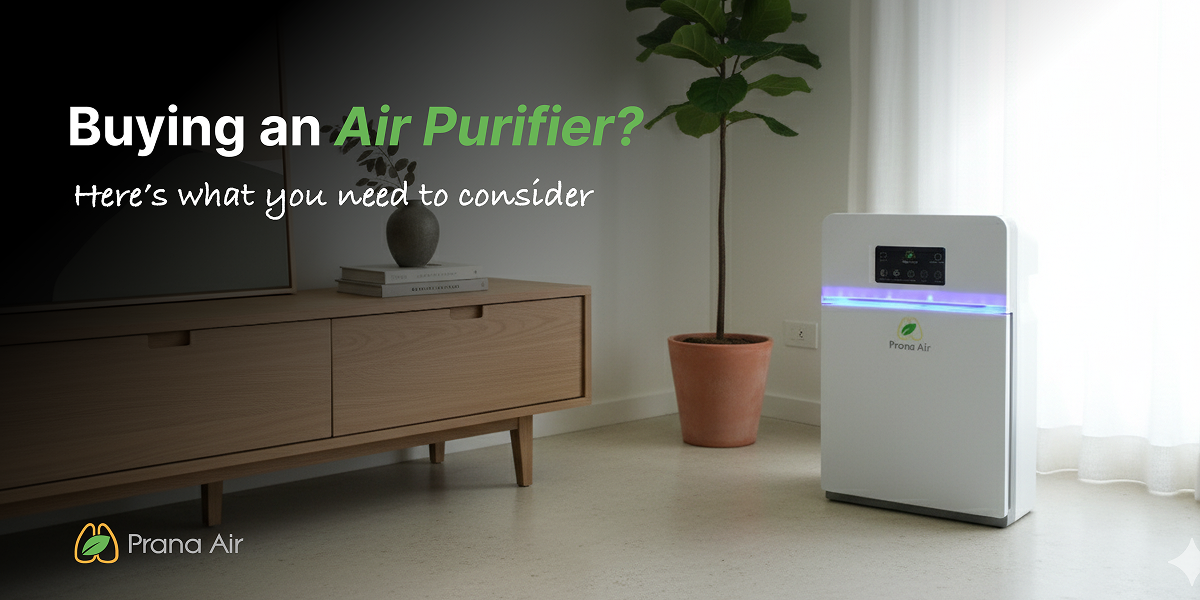
With the alarming increase in the pollution levels, it’s natural to pursue your hunt for buying an air purifier.
When choosing an air purifier, it’s essential to understand every specification, filter type, and technical detail for making a well informed purchase.
What is the Air Purifier actually doing?
Air purifiers work by drawing in indoor air, filtering out pollutants, and releasing clean air back into the room. Most purifiers use a multi-stage filtration system with a pre-filter that traps large dust and hair, a HEPA filter captures microscopic particles like PM2.5, pollen, and smoke. An activated carbon filter then removes odors and harmful gases. Some advanced models also include UV light or ionizers to neutralize bacteria and viruses.
The main advantages of air purifiers include reducing allergens, removing fine dust and smoke, and improving respiratory health, especially for those with asthma or allergies. They also help lessen indoor odors, minimize the effects of pollution during thick smog seasons, and create a cleaner, fresher environment for better sleep and comfort.
Key Specifications to Look For While Buying an Air Purifier
1. HEPA filters and efficiency
HEPA filters are broadly classified physically into panel (flat) filters, pleated or deep-pleat packs, mini-pleat filters, cylindrical cartridges, and bag/pocket filters, each designed for different airflow volumes, space constraints, and applications.
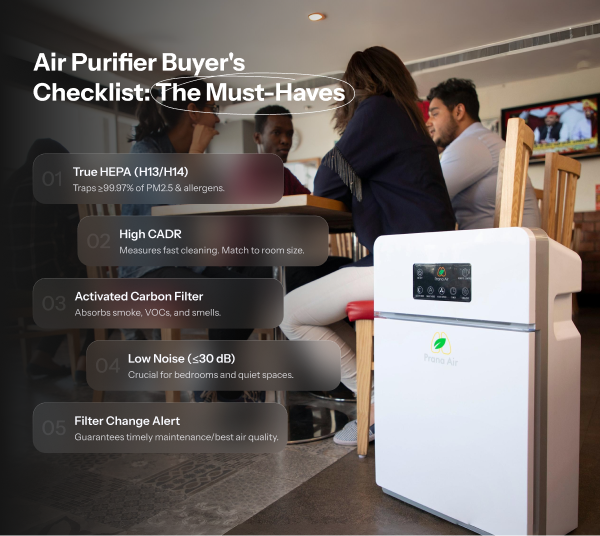
True HEPA filters (H13, H14) provide the best performance and capture 99.97% of airborne particles as small as 0.3 microns, including dust, pollen, smoke, and PM2.5. These are crucial for allergies or critical cleanroom conditions.
Recommended:
- True HEPA Filters
- Efficiency: ≥ 99.97% (0.3 microns)
- Pre-filter: Washable or replaceable to extend HEPA lifespan
2. CADR (in CFM)
CADR (Clean Air Delivery Rate) measures how quickly the purifier cleans air of smoke, dust, and pollen (in cubic meters per hour or CFM i.e. cubic feet per minute).
Higher CADR = faster cleaning.
Recommended:
- Small room (≤150 sq. ft): 100–150 CFM (≈ 170–250 m³/h)
- Medium room (150–300 sq. ft): 150–250 CFM (≈ 250–425 m³/h)
- Large room (300–500 sq. ft): 250–400 CFM (≈ 425–680 m³/h)
Choose a CADR that’s at least two-thirds of your room’s area (in sq. ft) for best efficiency.
3. Activated Carbon Filter
An activated carbon filter absorbs gaseous pollutants, VOCs (Volatile Organic Compounds), odors, and smoke that HEPA filters can’t remove.
Check for filter weight or carbon density — more carbon means better performance.
Recommended:
- At least 200–300 g of activated carbon for medium rooms
- Granular carbon preferred over thin-coated carbon sheets
- Replace every 6–12 months depending on air quality
4. Coverage (Room Size)
Every purifier lists a maximum coverage area, often based on CADR and air changes per hour (ACH). Look for models that can clean your entire room 4–5 times per hour.
Recommended:
- Bedroom: 150–250 sq. ft
- Living room: 300–500 sq. ft
- Office or studio: Match CADR × 1.55 to estimate coverage (for 4.8 ACH)
5. Noise Level
Noise matters, especially for bedroom or workspace use. Most purifiers have multiple fan speeds and higher speed means louder noise.
Recommended:
- Sleep mode: ≤ 30 dB
- Medium speed: ≤ 45 dB
- High speed: ≤ 55 dB
Look for models with sleep or silent mode and brushless motors for quieter performance.
6. Filter Maintenance and Replacement
Filter longevity and maintenance are major factors in long-term ownership.
Recommended:
- Pre-filter: Wash every 2–4 weeks
- HEPA & Carbon filters: Replace every 6–12 months
- Check filter indicator: A “filter change alert” ensures timely replacement
Avoid purifiers with non-removable filters — they shorten lifespan and add cost.
7. Energy Consumption
Purifiers run for long hours, so energy efficiency matters.
Recommended:
- Energy Star–rated models
- Power usage: 30–60 W for medium-size purifiers
- Run on auto mode to save power when air quality improves
8. Additional Smart Features
Modern air purifiers include smart tech that improves convenience and monitoring accuracy.
- PM2.5 & gas sensors: Real-time air quality feedback
- Auto mode: Adjusts fan speed based on detected pollution
- App or Wi-Fi control: Track AQI, filter life, and power remotely
- Child lock & timer: Safety and scheduling convenience
- UV or ionizer (optional): For added germ control (ensure ozone-free operation)
What do you need to do from your end first and foremost?
Before even comparing specifications for buying an air purifier, start by evaluating your indoor air quality and room setup.
- Check whether your main issue is dust, smoke, odors, or poor ventilation as this will guide which features matter most.
- Measure your room’s size (in sq. ft), note if windows are usually closed, and identify nearby pollution sources like traffic, cooking, or pets.
- Also, ensure you have some form of ventilation (even periodic) since air purifiers alone cannot remove CO₂.
Once this is clear, use the following specs to pick a model suited to your needs.
The Hidden Downsides explained
1. Doesn’t Curb the Source of Pollution
Air purifiers only clean the air that passes through them and not the source. If indoor air is being polluted by cooking fumes, smoke, dust accumulation, or outdoor infiltration, the purifier will need to work constantly, consuming more power and reducing filter life.
2. High Maintenance Requirements
Filters need regular cleaning or replacement to remain effective. High-quality HEPA and carbon filters can be expensive, often requiring replacement every 6–12 months, adding to long-term costs.
3. Limited Coverage Area
Each purifier is designed for a specific room size. Using a single device for multiple rooms or large open areas drastically reduces performance.
4. Limited Effect on Certain Pollutants
Air purifiers excel at removing particulates (PM2.5, dust, pollen) but struggle with CO₂, CO, and moisture. Since they don’t introduce fresh air exchange, pollutants that depend on ventilation remain trapped indoors.
5. Noise Levels at High Fan Speeds
To achieve faster air cleaning, purifiers often operate at high fan speeds, which can generate noticeable noise (50–60 dB).
6. Ozone Release in Electrostatic or Ionizing Models
Some purifiers use electrostatic precipitation or ionization to charge and capture particles. However, these processes can produce ozone (O₃) as a by-product which can irritate the respiratory system. *
7. Energy and Operational Costs
Since purifiers need to run continuously during pollution peaks, they can increase electricity bills and require periodic filter replacements.
Product Recommendations
- To maintain indoor freshness and tackle stale air, that air purifiers don’t do, go for fresh air machines such as the Fresh Air Machine from Prana Air. These are designed to refresh your environment without adding harmful chemicals.
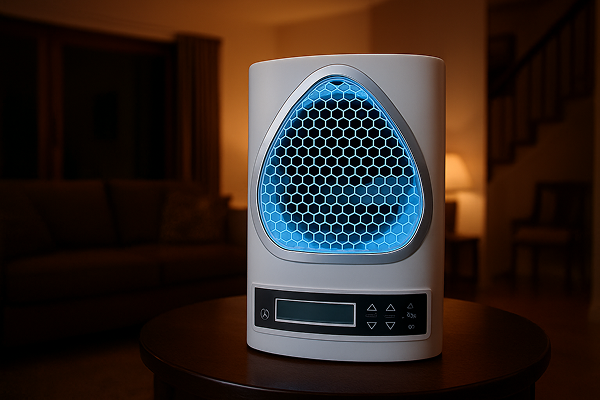
- For relief from germs, pollutants and odours, an excellent choice would be Prana Air’s Air Sanitizer cum Air Purifier that is packed with electrostatic filtration, ionization chamber, regulated purification and photocatalytic disinfection for absolute mega cleansing.
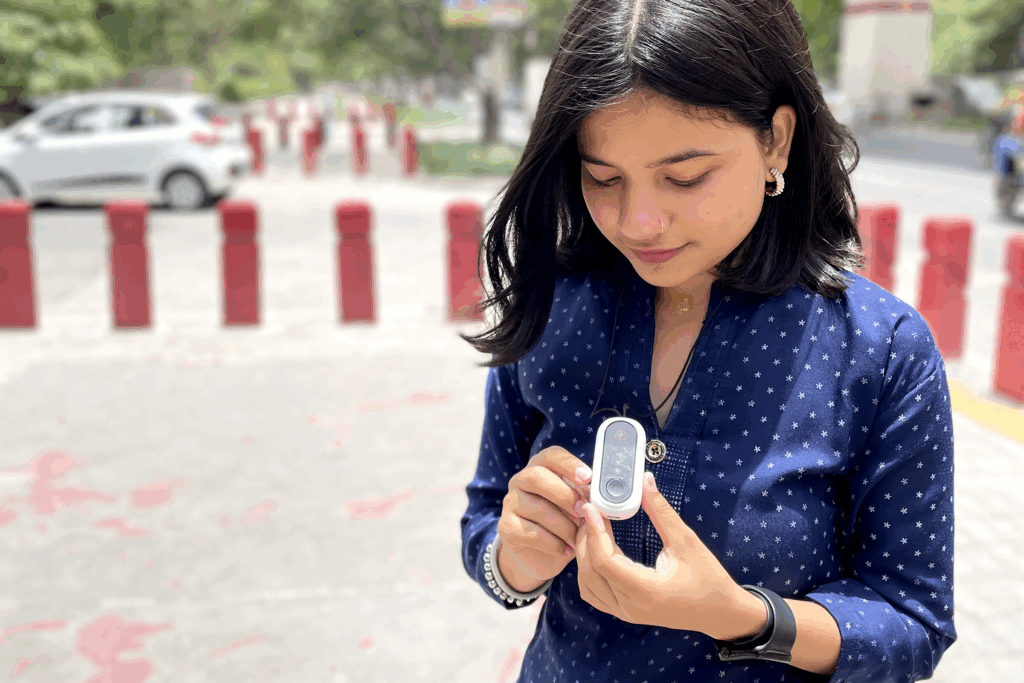
- For a more portable and personalized solution, Prana Air’s Wearable Air Purifiers would be a good pick for cleaning the air in your vicinity.
To Summarise
Air purifiers play an important role in maintaining indoor air quality and one must be aware of the specifications to look for while buying an air purifier. But these should be used as part of a larger air management strategy and not the only solution. Combining source control, ventilation, and purification ensures truly healthy indoor air.