
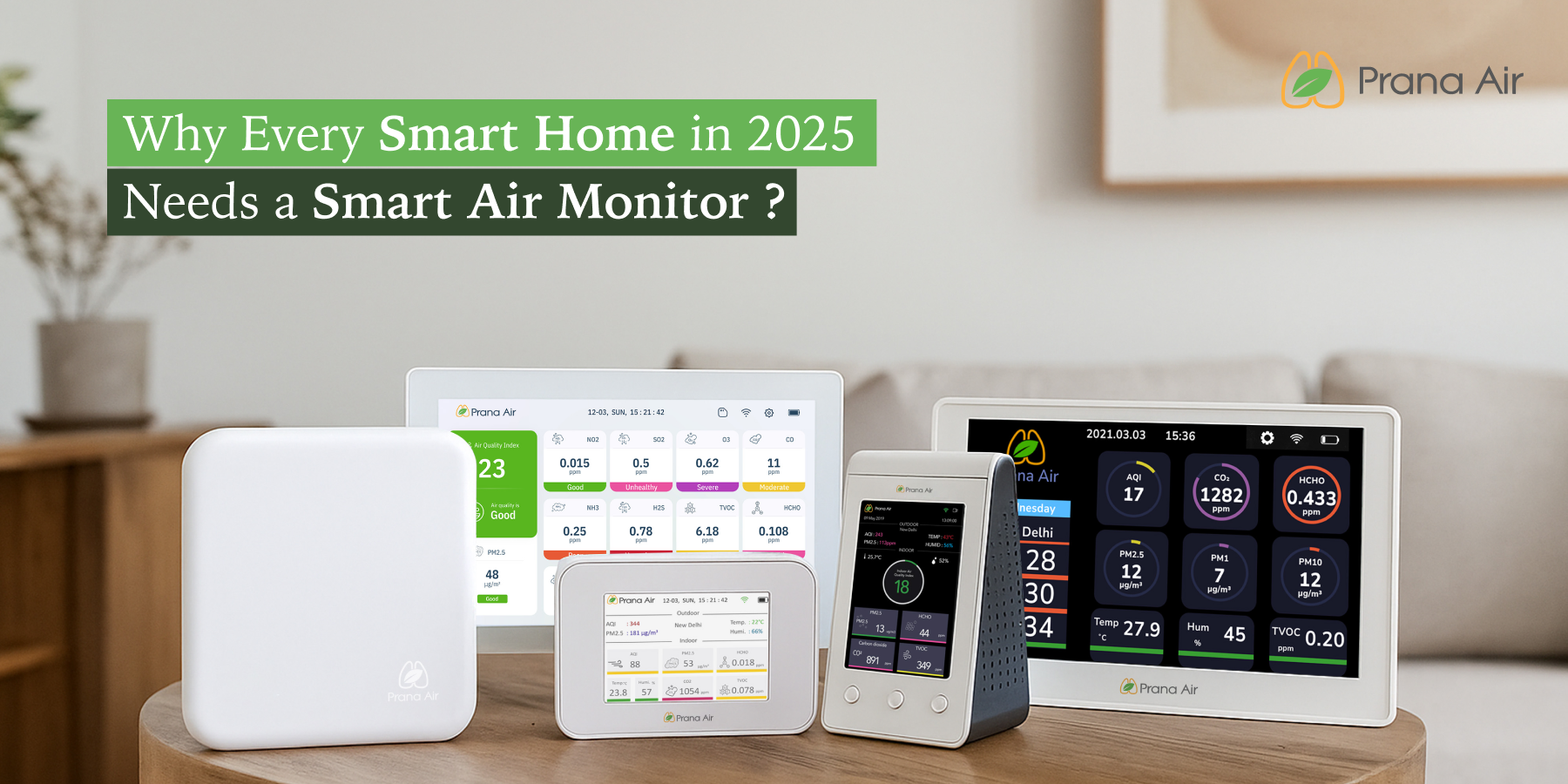
The future of smart living is health conscious
Smart homes have redefined comfort. Lights respond to voice commands, temperatures adjust automatically, and even the morning coffee brews itself on schedule. Yet amid all this convenience, one crucial part of well-being is often ignored: the quality of the air we breathe indoors. That’s where a smart air monitor becomes essential, it helps your home stay as healthy as it is intelligent.
In 2025, a truly smart home is not just connected; it is aware. As technology evolves, air quality is emerging as a core component of modern living.
The invisible problem inside modern homes
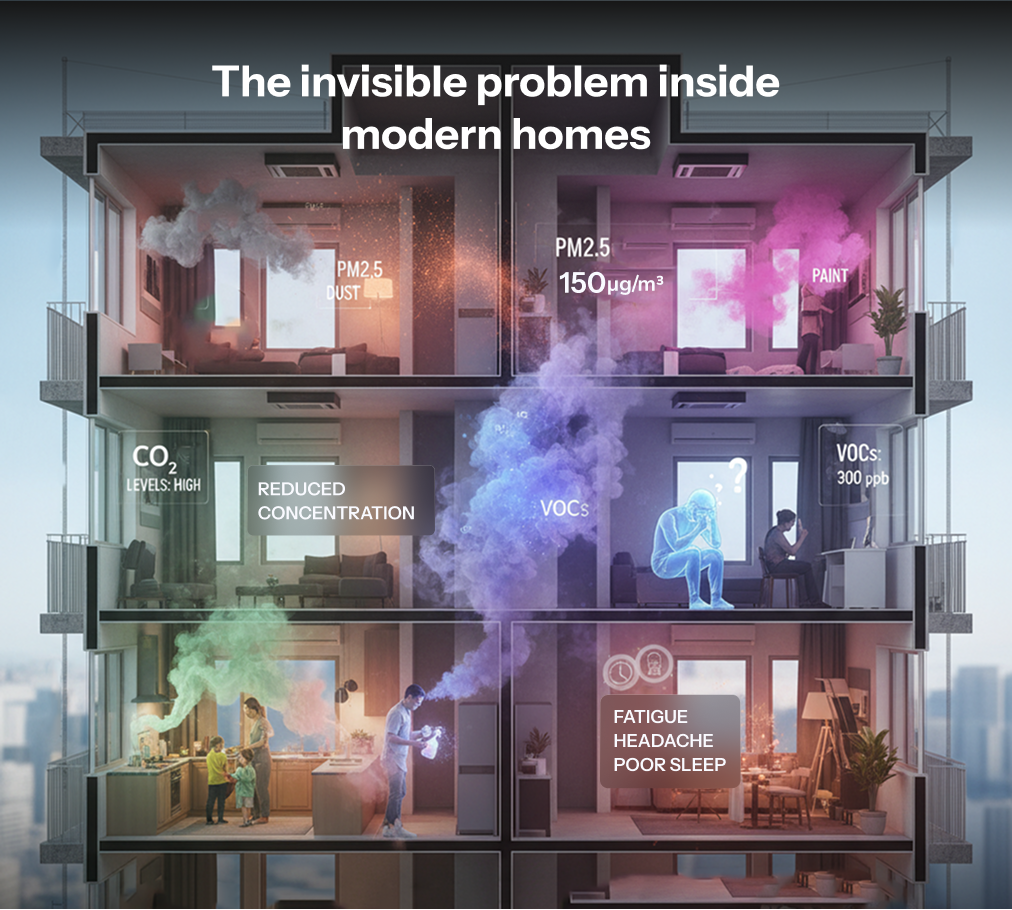
Urban homes are designed to be efficient, tightly sealed, air conditioned, and well insulated. These same features also trap pollutants. Cooking fumes, cleaning sprays, incense smoke, and paint particles accumulate indoors while ventilation remains limited.
According to the World Health Organization (WHO), indoor air can be up to five times more polluted than outdoor air. Even when outdoor conditions appear normal, indoor spaces often contain fine dust (PM2.5), volatile organic compounds (VOCs), and elevated CO₂ levels.
Long-term exposure to these pollutants can lead to fatigue, headaches, poor sleep, and reduced concentration, as highlighted by the United Nations Environment Programme (UNEP). For a space built to make life easier, that is a serious contradiction.
The role of smart air monitors in connected homes
A Smart Air Monitor bridges the gap between comfort and health. It continuously measures pollutants such as PM2.5, PM10, CO₂, VOCs, humidity, and temperature, providing real-time data on what you are actually breathing, not just what citywide AQI numbers indicate.
Many models integrate with home automation systems. When air quality drops, they can automatically activate purifiers, send alerts, or prompt ventilation. This transforms awareness into action and allows your home to respond intelligently to changing air conditions.
In India’s urban centers, where outdoor pollution levels remain high throughout the year, these devices are fast becoming an essential part of modern living.
Why air awareness matters in 2025
Air pollution is no longer a seasonal problem. Real-time data on AQI.in’s Delhi dashboard shows that most metropolitan areas frequently cross safe limits throughout the day. With people spending nearly 90% of their time indoors, understanding indoor air quality has become more important than ever.
The shift from general outdoor awareness to personalized indoor tracking marks a major step toward truly health-conscious living. By identifying pollution spikes in real time, homeowners can take timely actions that directly improve comfort, focus, and well-being.
How to choose the right smart air monitor
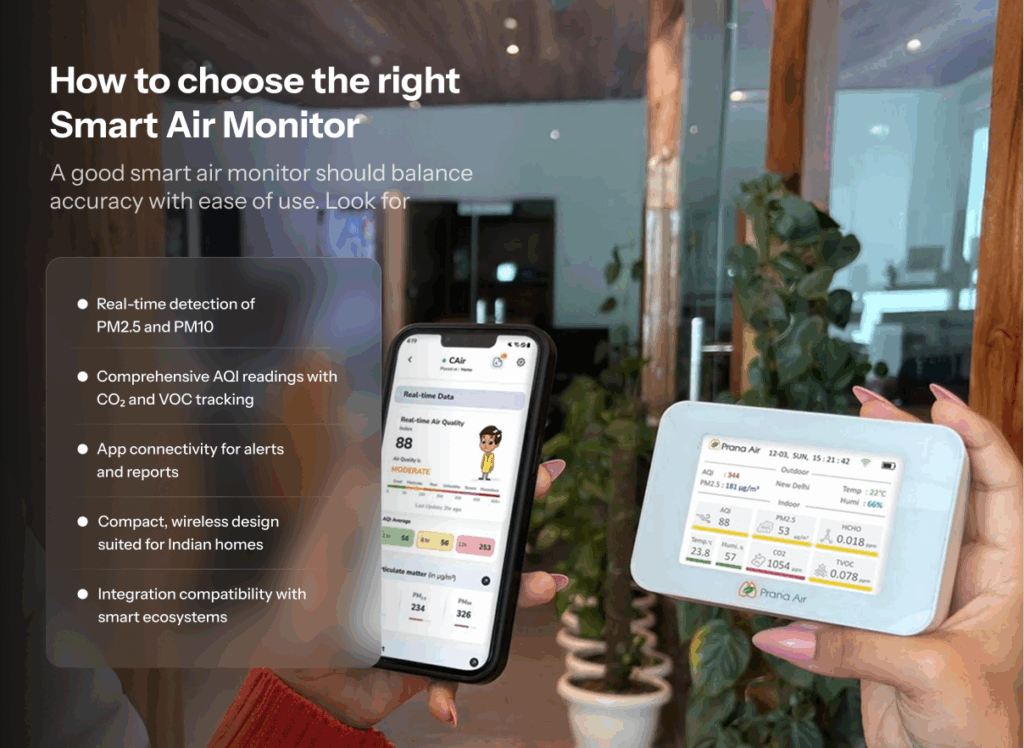
A good smart air monitor should balance accuracy with ease of use. Look for:
- Real-time detection of PM2.5 and PM10
- Comprehensive AQI readings with CO₂ and VOC tracking
- App connectivity for alerts and reports
- Compact, wireless design suited for Indian homes
- Integration compatibility with smart ecosystems
These features ensure reliable, actionable data, not just numbers on a screen.
Built for Indian conditions. Designed by Prana Air.
At Prana Air, we develop technology that makes clean air measurable, understandable, and actionable. Our Smart Air Monitors are designed for Indian environments where humidity, dust, and fluctuating AQI levels require precision and resilience.
Each monitor provides real-time data through an intuitive app, enabling users to make informed decisions about their indoor environment. With elegant design and practical accuracy, Prana Air combines science and simplicity to make every home more aware and healthier.
Smarter homes breathe better
Automation has made homes convenient. Awareness makes them healthy.
As India moves toward smarter, more conscious living, homes that monitor and respond to air quality will set the standard for well-being. Clean air is no longer optional — it’s an integral part of truly smart living.